
Mankato City Directory Collections
The strongest Mankato city directory collection is held by the Blue Earth County Historical Society, or BECHS. Its Research Center combines directory volumes with local newspapers, obituary indexes, yearbooks, family histories, and clipping files. That matters because a printed listing is a dated lead, not a full account of a household. The collection can move a family from a name to an address, then to a newspaper notice, cemetery reference, or recorded deed that helps test the match.
| Collection | Years | Where held | Access |
|---|---|---|---|
| R. L. Polk & Co. city directories | 1892-2014 | BECHS Research Center | Appointment or research order |
| Polk address or householder section | Identified from 1929-30 | BECHS Research Center | Consult the relevant volume |
| Early Mankato business directory | 1871-72 | BECHS and local-history holdings | Confirm the volume onsite |
| Blue Earth County directory | 1881 | BECHS and local-history holdings | Confirm the volume onsite |
These Mankato city directories have gaps, title changes, and geography shifts. A shelf label alone is not proof that a particular annual edition exists or covers the same boundaries. Check the actual bound volume and transcribe its title page with the entry.
Using Mankato City Directories at BECHS
BECHS is at 424 Warren Street in Mankato. Its research page lists Research Center access Tuesday through Saturday from 10 a.m. to 3 p.m. by appointment, while the History Center has separate listed hours. Staff can pull material for an appointment or accept research orders by email. State the surname, address, date range, and whether the request concerns a directory, clipping, obituary, or photograph. That gives staff a usable starting point without asking them to invent a new index.
The BECHS Research Center page is the source for this collection and access route.
Its collection summary helps separate a directory lookup from a newspaper or archival request, which can save time when a family appears only once in print.
Library material provides a second local route. The Blue Earth County Library genealogy service lists a Minnesota death index, in-library Ancestry access, and Mankato Free Press microfilm from January 1859 to the present. A library obituary request asks for the deceased person and event details, so a directory address or spouse notation can make that request more precise.
Note: Confirm an appointment and current response expectations before traveling, because BECHS reported volunteer Research Center staffing after its archivist position became vacant.
Mankato City Directory Years and Titles
The Polk run contains 83 listed volumes from 1892 through 2014. Its sequence includes scattered early editions, annual runs in the 1960s and much of the 1970s, then changing titles that can affect a search. Volumes from 1980 through 1991 are cataloged as “Mankato North Mankato.” The 1992-96 group is “Mankato,” and the 1997-2006 group is “Mankato St Peter.” A result under one title should not be assumed to cover precisely the same place as another.
The BECHS Polk city-directory collection documents the volume list and its reverse-section description.
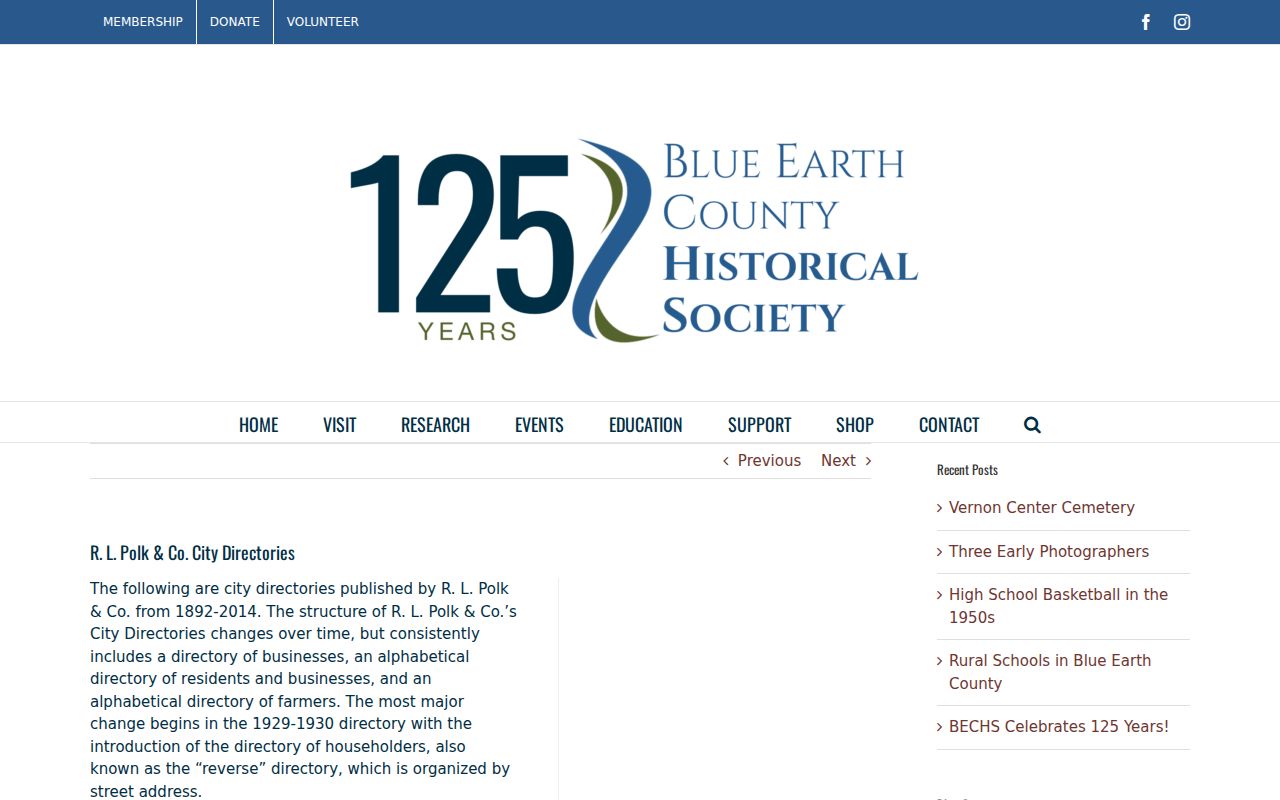
The collection image belongs with the catalog record, not with an assumption that every edition is a separate searchable database.
- 1871-72: BECHS reports an early Mankato Business Directory.
- 1881: BECHS reports a Blue Earth County Directory.
- 1892: the surviving Polk sequence begins in the BECHS collection.
- 1929-30: the collection list identifies a householder or reverse section.
- 2014: the listed Polk run ends with the final local volumes.
Mankato City Directory Reverse Sections
Later Mankato city directories can work in both directions. The alphabetical section answers name to address. The householder or reverse section turns a street address into a listed householder or business contact. That is useful when an old deed, newspaper clipping, or family note supplies an address but no certain surname. It is still a published snapshot, not proof of everyone living there.
There is a real catalog nuance worth preserving. The Polk collection lists a householder or reverse section beginning with 1929-30, while a separate BECHS newsletter describes reverse Mankato directories beginning in 1932. Those statements may refer to different formats or catalog labels. Treat 1929-30 as the earliest listed reverse section and 1932 as the newsletter's separately described reverse-directory date, then inspect the needed volume.
For a modern address-led search, the county property and map records are more appropriate than a historical volume. The Mankato street directory covers that current address chain.
Reading a Mankato City Directory Entry
Transcribe a Mankato city directory entry field by field. Begin with the surname and given name, then preserve a spouse or relationship notation if the volume prints one. Record the occupation, business or employer reference, street address, and any owner, renter, or widow notation exactly as displayed. A mark can have a different meaning from one volume to another, so do not expand an abbreviation by guesswork. Photograph or copy the key from the same edition before interpreting a shorthand entry.
| Name | Surname and given name, including initials or spelling variants. |
|---|---|
| Relationship notation | Spouse, widow, or other parenthetical wording when printed. |
| Occupation or business | A dated connection that may point to a newspaper, account, or organization record. |
| Address | The printed house number and street, retained exactly for a later reverse lookup. |
| Owner or renter mark | A volume-specific symbol or wording, interpreted only with that edition's key. |
- Criss-cross section
- The address-ordered part of a directory that can lead from a street number to a listed householder or business.
- Householder index
- A directory arrangement centered on the person or business identified with an address, not a complete household census.
- Abbreviation key
- The volume's own explanation of symbols and shortened words. It should be consulted before any notation is expanded.
Mankato City Directory Companions
Directories become more convincing when a second local collection supports the same person, place, or time. BECHS has school yearbooks, family histories, church materials, business and personal accounts, photographs, cemetery indexes, and clippings. Its Mankato High School yearbooks run from 1910 to 1973; East, West, Loyola, and Mankato Commercial College materials cover later or overlapping periods. These are date-specific associations, not proof of a current address.
The library genealogy page documents the death index and newspaper microfilm route used beside directory research.
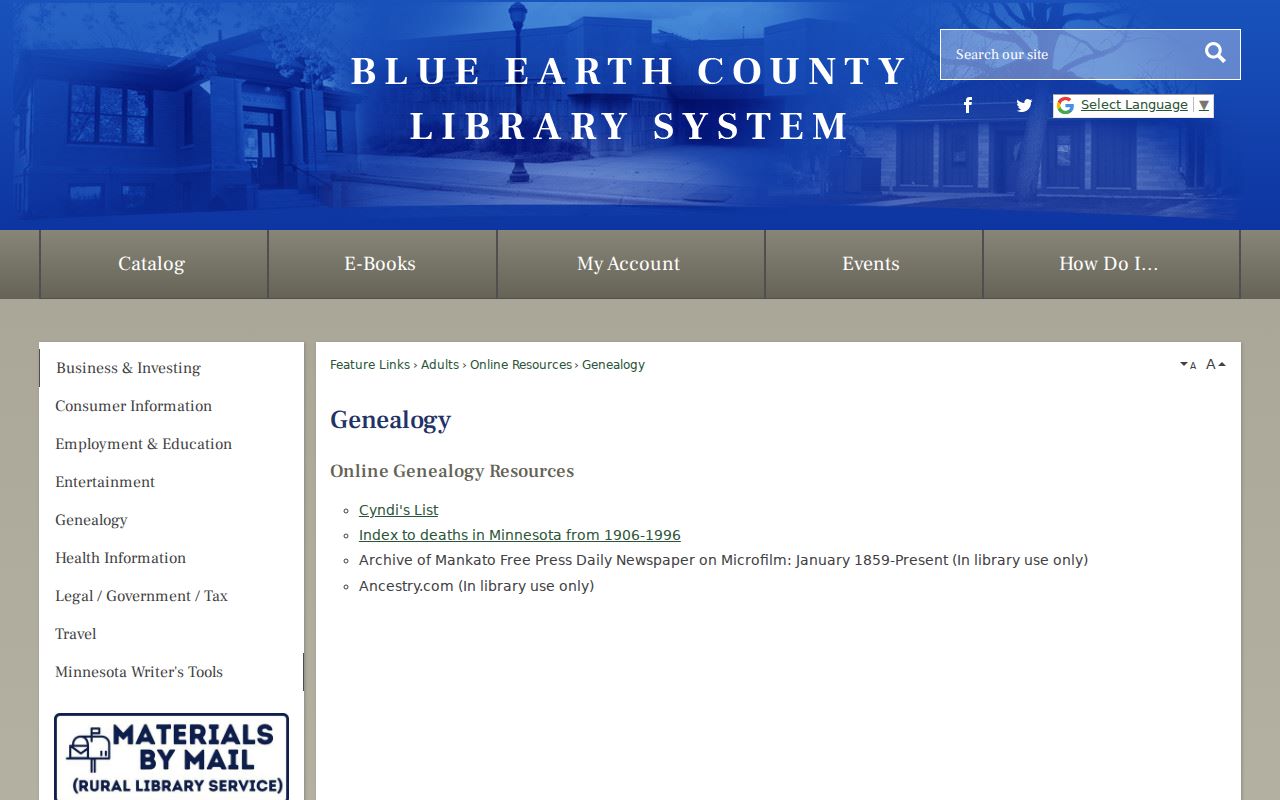
A newspaper notice can test whether a directory name and address belong to the same family at the date in question.
The BECHS finding aids identify school, church, club, family, architectural, business, and civic collections.
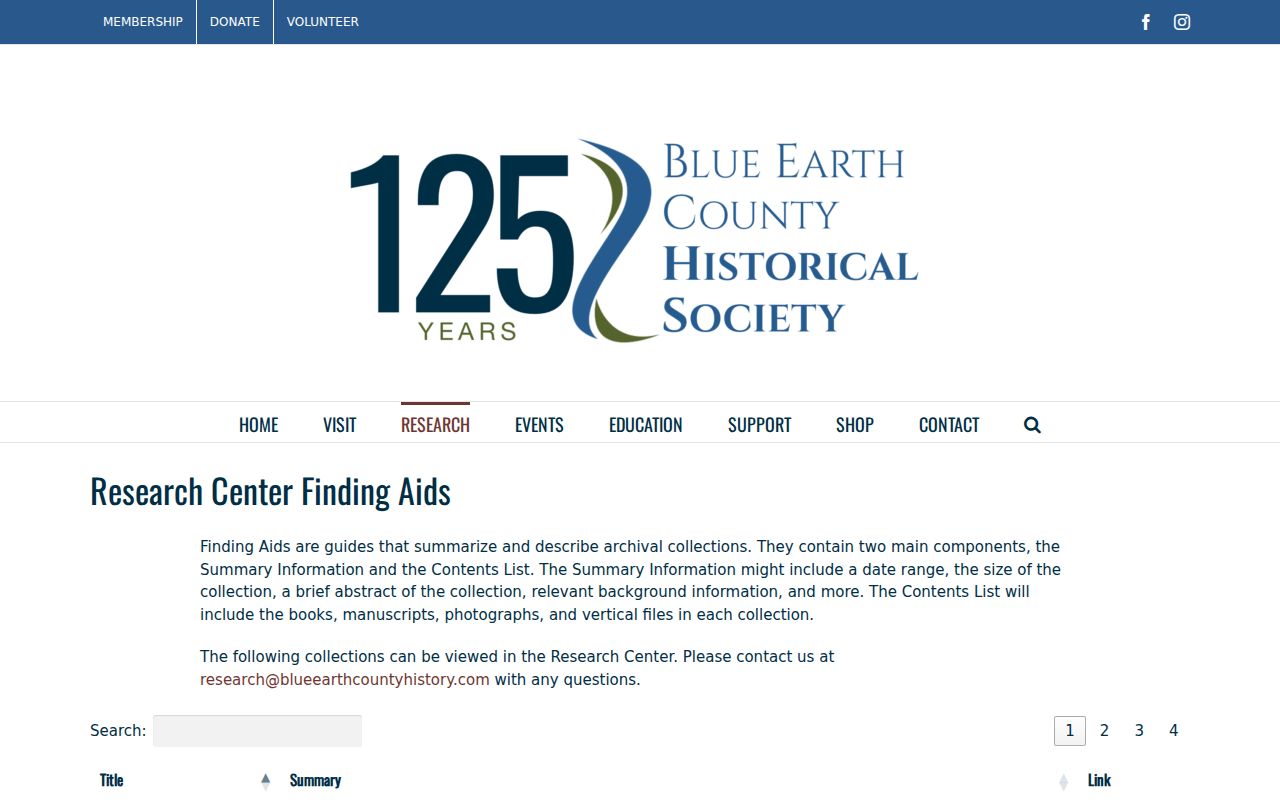
Finding aids help locate a companion collection before requesting material, especially when a directory identifies a school, church, or local organization.
Mankato City Directories Across 1890
The destroyed 1890 federal census makes the nearby Mankato city directories unusually valuable. The 1892, 1895, 1897, and 1900 volumes can bridge the gap between the 1880 and 1900 federal schedules. They cannot recreate the missing census, but they can show a person or business at a published address near that period. Keep the exact directory year separate from an event date because a volume may have been compiled before its title year.
Pair 1880, 1900, 1910, 1920, 1930, 1940, and 1950 census schedules with nearby directories. For a person who disappears, test several explanations: a move, a name variant, a death or remarriage, an unlisted household, or a shift between Mankato and North Mankato. Deeds, obituary indexes, marriage records, church sources, and the Mankato Free Press microfilm can distinguish those possibilities.
Mankato City Directory Newspaper Leads
Use a directory date to narrow a newspaper search, then keep the two sources distinct in the research log. Blue Earth County Library describes Mankato Free Press daily microfilm from January 1859 to the present for in-library use. The Minnesota Historical Society's Mankato Free Press holdings describe title runs in the Gale Family Library that differ from the library's local microfilm description. BECHS has its own repository-specific microfilm summary and local online indexes.
BECHS reports indexed marriage announcements from 1949 through 1988, comprehensive obituaries, wills from the 1850s through the 1970s, servicemen notes from 1942 through 1946, and social notes. A notice can supply a relationship, event date, or later address that tests a directory entry. A will filing date may fall days or years after a death, so record what the item actually dates. The newspaper is supporting evidence, not a reason to merge every same-surname mention into one family.
Tracing Mankato City Directories by Household
A household trail starts with one reliable listing and moves in small, documented steps. Use both the alphabetical and reverse forms where the volume supplies them. Preserve street spellings, numbers, initials, spouse notes, and business names as they appear. Mankato addresses can change in form over time, and the same family may appear under a married name, a widow notation, or a different city label in a later title.
- Find the first likely appearance and transcribe the complete entry with its directory year.
- Check the closest available volumes on each side, allowing for gaps in the Polk run.
- Use the reverse section, when present, to test the address and identify its listed householder.
- Compare a nearby federal census schedule with the directory's date and household details.
- Close the trail with an obituary, cemetery index, newspaper notice, deed, or another contemporaneous record.
When a directory result needs a present-day official record check, use a Mankato resident lookup rather than treating an old printed address as current. A good research log separates a directory lead from a viewed newspaper item, recorded document, or census household.
Note: An address or householder entry is evidence for that published snapshot, not a claim that every family member lived there.